A.W100.1 Arete logo name RGB(29,155,240) R TM SM Arete Consulting
A.W109.1 AreteCutawayTransparentCar CTM US 49 CFR 500-599 Due Care 70OPACITY

     Due Care

Summary of the Guiding Principle of Ethical Product and Vehicle Engineering

Overview

U.S. federal and state regulations require compliance in two ways: (i) standards explicitly applicable to the vehicle class, and (ii) standards required for “due care” for voluntarily offered equipment from a different vehicle class and/or different product class.

This article focuses on and explains the concept of due care for regulatory compliance and ethical engineering best practices (also referred to as “reasonable care” or “due diligence”). Especially when considering that the manufacturing, operation, and mere existence of motor vehicles potentially risk property, health, lives, and livelihoods, the stakes are very high. The purpose of this article is to increase awareness of statutes and regulations, compliance requirements, and safety standards. The ultimate goal is to help improve motor vehicle safety and help save lives.

Due care, regulatory compliance, and ethical engineering start with accurate and complete identification of applicable requirements, and progress throughout the numerous design and development phases and stages. The U.S. federal system comprises statutes in the United States Code (U.S.C.) and regulations from the various governmental agencies, including: the U.S. Department of Transportation (USDOT)’s National Highway Traffic Safety Administration (NHTSA) Federal Motor Vehicle Safety Standards (FMVSS) and their Test-Procedures, USDOT Pipeline and Hazardous Materials Safety Administration (PHMSA) regulations for hazardous material (“hazmat”) such as lithium-ion, U.S. Federal Environmental Protection Agency (EPA) regulations for hazmat such as lithium-ion, U.S. Federal Communications Commission (FCC) regulations for Electromagnetic Compatibility (EMC), as well as certain other Code of Federal Regulations (CFR) Parts and Sections (§) required as performance standard reference for due care for voluntarily offered equipment (collectively “laws”), and for durability and reliability testing to avoid concerns with “Lemon Laws.”

Unlike the European Union (EU) regulatory system, the U.S. regulatory system requires motor vehicle manufacturers to self-certify compliance prior to introduction of motor vehicles into interstate commerce without any governmental oversight or checks to ensure appropriate regulatory application, testing, or results. This system is reliant upon honor and diligence, and thus is vulnerable to new manufacturers’ unfamiliarity with due care, requirements, and design ethics.

In case of significant failures in the field, or National Transportation Safety Board (NTSB) investigation, NHTSA audit, or entire fleet recall, a failure to have ensured and documented due care during the design and development phases has potentially severe consequences, including government determination of defects and noncompliances, enforcement actions, increased likelihood of civil and criminal charges, and higher penalties sought.

Key Statutes and Regulations for Due Care

Per numerous U.S. federal statutes, including 49 U.S.C. §§ 30112 (PDF), 30115 (PDF), and 30116 (PDF), a motor vehicle manufacturer must ensure all its vehicles are fully compliant to all applicable statutes and regulations (“laws”) prior to manufacture for sale, sale, offer for sale, introduction, or delivery for introduction in interstate commerce. Pragmatically, such determination of full compliance can only be determined through a compliance testing and verification process.

U.S. state laws require compliance to the same FMVSS prior to operation of motor vehicles on public roads. Federal preemption of state laws means states cannot require anything that does not match exactly with federal law. Typically, U.S. state laws incorporate by reference relevant federal motor vehicle laws, and some states explicitly restate federal requirements into state statutes and regulations for the added benefit of being able to also prosecute violations under state law, in addition to federal law.

Within FMVSS, many additional standards and specifications are incorporated by reference, but must be researched separately. This convention is defined at 49 CFR § 571.5 Matter Incorporated by Reference.

  • For example, numerous Society of Automotive Engineers (SAE) J-documents for surface vehicles are incorporated by reference. This is additionally explained within each relevant Federal Safety Standard, such as within 49 CFR § 571.108(S5) Lamps, Reflective Devices, and Associated Equipment (“FMVSS 108”), emphasis added:

    • S5 References to SAE publications. Each required lamp, reflective device, and item of associated equipment must be designed to conform to the requirements of applicable SAE publications as referenced and subreferenced in this standard. The words “it is recommended that,” “recommendations,” or “should be” appearing in any SAE publication referenced or subreferenced in this standard must be read as setting forth mandatory requirements.

  • Regulatory note: All standards incorporated by reference into laws are required for proper implementation of and compliance with such laws, which by law must be published free of charge to all citizens subject to such laws. Such standards used here in whole or in part for purposes of criticism, comment, teaching, scholarship, and/or research qualify as Fair Use and which are recognized as not copyright infringement under U.S. law. For more information, see Terms of Use > Fair Use Notice.

Compliance to applicable and required FMVSS can only be demonstrated reliably by performance testing under controlled conditions that result in repeatable and reproducible data documented in passing test-reports.

Meaning of the Term “Due Care”

Due care involves more than just testing voluntarily offered equipment. As explained by former NHTSA Chief Counsel Erika Z. Jones in the NHTSA Interpretation Letter to Atwood Mobile Products B.Nudd, due care is also testing all required equipment, a principle, a process, and a deliverable. This excellent discussion of due care uses the example of seats and testing vis-à-vis FMVSS 207, so wherever specific terms such as “seat” or “seat test” are used, general terms such as “part” or “test” are equally useful, respectively (emphasis added):


Meaning, continued

While NHTSA regulations don’t explicitly require a manufacturer to use FMVSS Test Procedures to determine pass/fail, the regulations do require a manufacturer to certify its vehicle “will comply with Federal requirements when tested by the agency according to the procedures specified in the standard.” Following NHTSA’s advice, for various reasons it can be more practical, efficient, prudent, and regulatorily safe for a manufacturer to reconsider any reasons for not testing as specified in the standard, and instead “to test its products in only the manner specified in a particular motor vehicle safety standard.”

New manufacturers’ unfamiliarity with due care, requirements, and design ethics may lead to misunderstandings and improper planning. Even persons with established manufacturers may express misunderstandings of what due care actually is and what responsibilities a manufacturer has, as documented by Bloomberg Business Hyperdrive:

  • “In the U.S., things are legal by default,” [Tesla CEO Elon] Musk said. “In Europe, they’re illegal by default. So [in Europe] we have to get approval beforehand, whereas in the U.S., you can kind of do it on your own cognizance, more or less.”

This quote exemplifies a fundamental misunderstanding of due care. Could this partly explain why certain companies are being investigated by NHTSA for a rash of ADAS-ADS problems? Launching a new feature or whole new motor vehicle in the U.S. is not easier than attempting the same in the EU, and the U.S. market is not a dumping ground for untested vehicles, equipment, or features that anyone can arbitrarily claim is “legal by default.” For example, regarding the trend of enclosed three-wheel motorcycles in the last few years, the U.S. vehicle class “motorcycle” is not some kind of loophole to be able to market a passenger car-like vehicle without having to comply with passenger car safety standards. The requirements of diligence are essentially similar in both systems, and getting closer everyday through harmonization efforts by the EU and UN.

There is a same-but-different phenomenon among the U.S., EU, and other mature regulatory systems for motor vehicles. Achieving homologation in the EU Technical Harmonization system or other mature regulatory systems, such as GTR from WFHVR, prevents a vehicle manufacturer from creating, controlling, or performing the compliance testing process by itself, or interpreting the results, or otherwise influencing the outcome. This achieves the same level of due care but is different from the U.S. regulatory system, which requires a vehicle manufacturer to self-certify compliance without any direct governmental involvement. The U.S. federal system gives a vehicle manufacturer the flexibility to design custom testing campaigns, control the process with novel tests, use judicious and warranted engineering simulations and calculations, and write engineering justifications to ‘demonstrate due care and show its reasons for concluding that its particular set of tests was a reasonable surrogate for the agency’s compliance tests specified in the standards.’

Ultimately, a U.S. motor vehicle manufacturer must evidence the same documentation and the same level of due care as in the EU or any other mature regulatory system. There are no “shortcuts” to design and develop a safe vehicle. The difference is that the independent verification of the vehicle and manufacturer meeting the regulatory requirements will occur before a sale in Europe, whereas in the U.S. it may occur after a sale.

Example of an Enclosed Three-Wheel Motorcycle

Due to the historically typical features and equipment found on a two-wheel motorcycle, only a small minority of nine FMVSS and one other CFR Part have an Application section (or equivalent) that explicitly mention the vehicle class “motorcycle,” which are:

  1. FMVSS 106(S3) Brake Hoses.
  2. FMVSS 108(S3) Lamps, Reflective Devices, and Associated Equipment.
  3. FMVSS 111(S3) Rear Visibility.
  4. FMVSS 116(S3) Motor Vehicle Brake Fluids.
  5. FMVSS 119(S3) New Pneumatic Tires for [...] Motorcycles.
  6. FMVSS 120(S3) Tire Selection and Rims and [...] Vehicles Other Than Passenger Cars.
  7. FMVSS 122(S3) Motorcycle Brake Systems.
  8. FMVSS 123(S3) Motorcycle Controls and Displays.
  9. FMVSS 205(S3) Glazing Materials.
  10. 49 CFR 565.2(a)(1) Vehicle Identification Number Requirements.

However, there are several other NHTSA regulations that may not mention “motorcycle” in the Application section, but mention “all manufacturers” or “all motor vehicles” or clearly refer to motorcycles in the Requirements, or discuss motorcycle-relevant features in the Purpose and/or Scope sections. For example:

  • 49 CFR 573 Defect and Noncompliance Responsibility and Reports.
  • 49 CFR 574 Tire Identification and Recordkeeping.
  • 49 CFR 575 Consumer Information. Contrast 575.6(a)(2)(i) to 575.6(a)(4).
  • 49 CFR 576 Record Retention.
  • 49 CFR 577 Defect and Noncompliance Notification.
  • 49 CFR 579 Reporting of Information and Communications About Potential Defects. Compare 579.23 and 579.27.
  • 49 CFR 580 Odometer Disclosure Requirements.
  • And there are several other regulations that are also clearly applicable to the vehicle class “motorcycle,” both two- and three-wheel.

Thus, a three-wheel motorcycle manufacturer would be grossly noncompliant if it complied only with Part 565 and the nine FMVSS that explicitly mention motorcycles in the Application section (or equivalent), but also offered features and equipment not found on a typical two-wheel motorcycle that are the subject of other regulations. Thus, an enclosed three-wheel motorcycle is a perfect case-study for due care application questions.

Example, continued

Although an enclosed three-wheel motor vehicle is classified as a “motorcycle,” its design and features provide additional, voluntarily offered equipment from a different vehicle class and/or different product class, not typical of traditional two- or three-wheel motorcycles. These atypical features may include any of the following:

  • A large, high-voltage, and/or high-amperage Li-ion traction battery in an electric vehicle (EV);

  • Fully-enclosed cabin, passenger car-like full windshield bordered by cowl, A-pillars, and roof;

  • Roll hoop(s) and/or A-pillars, B-pillars, and C-pillars, bumpers, transmission, differential, and/or transaxle;

  • A manual- or power-operated full passenger car-like canopy door with side windows enclosing the seating area;

  • A mix of motorcycle and passenger car-like controls, steering wheel or yoke;

  • Manufacturer-installed three-point seat belts, air bags, and/or other safety and supplemental restraint systems, passenger car-like seats with integrated head restraints;

  • Non-leaning, flat-rolling tires, Tire Pressure Monitoring System (TPMS);

  • Extendable axles, lengthening chassis, Electronic Stability Control (ESC);

  • Trunk, front trunk (“frunk”), latchable hood, full-size passenger car-like doors, door hinges, door latches, and door locks, power-operated windows, and/or roof panel systems;

  • Windshield defrosting and defogging systems, windshield wiping and washing systems;

  • Head-Up Display (HUD), projection-style display, holographic display, heavy reliance on software and drive-by-wire (DbW), Machine Learning (ML), Artificial Intelligence (AI), and/or Extended Reality (XR): Augmented Reality (AR), Mixed Reality (MR), or Virtual Reality (VR);

  • Advanced Driver Assistance Systems (ADAS, aka “driver support features” including SAE J3016 Levels 0, 1, and 2) and Autonomous Driving Systems (ADS, aka “automated driving features” including SAE J3016 Levels 3, 4, and 5);

  • Backup camera, monitor, and related equipment for a rearview image system; and/or

  • Side mirrors, monitor, and related equipment for a sideview image system to supplement required physical side mirrors.
Example, continued

As a designer and manufacturer of motor vehicles, an enclosed three-wheel motorcycle manufacturer must exercise due care in the design and testing of all components, subassemblies, assemblies, features, and devices, including those required by the regulations to be present in a motorcycle, those for safety, and those voluntarily offered. Presumably, the motorcycle manufacturer developed its enclosed three-wheel motorcycle to be “safer” to operate on the road than typical 2-wheel motorcycles, in part, by voluntarily offering such additional equipment. Thus, the motorcycle manufacturer has the responsibility and the “burden of proof” to demonstrate its motorcycles meet the minimum requirements for safety.

Due care means the enclosed three-wheel motorcycle manufacturer should:

  1. Comply with the additional FMVSS and CFR Parts that are mandatory and applicable to any voluntarily offered equipment and features;

    • For example, if any equipment from the vehicle class “passenger car” is voluntarily offered, then all the FMVSS and CFR Parts applicable to that equipment must be referenced and followed for due care.

    • If a three-wheel motorcycle manufacturer voluntarily offers a roof and encloses the cabin (passenger compartment) with doors, then FMVSS 201, 206, and 216a must be followed, and seat belt safety restraints must be ensured.

    • If an enclosed three-wheel motorcycle manufacturer voluntarily offers seat belts, then FMVSS 207, 208, 209, 210, and 214 must be followed.

    • If an enclosed three-wheel motorcycle manufacturer voluntarily offers a steering wheel or yoke, instead of a handlebar, then FMVSS 101, 203, and 204 must be followed.

  2. Ensure all required and voluntarily offered equipment is, in fact, compliant as built into the production-intent enclosed three-wheel motor vehicle, which is pragmatically only possible through performance and compliance testing; and

  3. Use publicly available resources where appropriate to design its due care testing campaigns for quality, reliability, safety, compliance, etc.

This strategy is congruent with directives from NHTSA to particular manufacturers in safety compliance reports. For example, Polaris, Inc. which makes the enclosed three-wheel motorcycle Slingshot, also voluntarily offered additional equipment such as seat belts, only to discover too late failures in design, testing, and/or manufacture. Polaris was consequently explicitly directed by NHTSA to enact multiple recalls including on MY2018 Slingshot, possibly at substantial financial and reputational cost, see recalls 18V195, 18V531, and 19V185.

Example, continued

Based upon an analysis of NHTSA Interpretation letters and enforcement actions, NHTSA suggests manufacturers use FMVSS as performance standard references for due care, such as for voluntarily offered equipment on motorcycles. NHTSA differentiates two aspects of due care:

  • Incomplete systems, or incomplete sets of systems:

    • This undeniable failure of due care is not always identified or understood, but is severely problematic.

    • For example, it would be an obvious breach of due care to completely enclose a motor vehicle cabin with a windshield and other glazing and then not offer windshield-related systems to ensure basic safety, such as windshield defrosting, defogging, wiping, and washing systems. A motor vehicle manufacturer compliant to due care requirements understands that voluntarily offering a full windshield and other glazing to completely enclose a vehicle cabin:

      • Necessarily entails also providing windshield defrosting and defogging systems, as well as windshield wiping and washing systems, to ensure clear glazing requisite for driving visibility in case the glazing frosts, fogs, is wetted, or is dirtied; and also

      • Necessarily entails testing and verifying proper functionality of all the voluntarily offered equipment, that purport to operate in the manner and efficacy a driver expects of other vehicles. This is the second aspect of due care.

  • Untested systems or sets of systems:

    • This aspect is equally problematic, since the absence of documented evaluation means, if the manufacturer certifies compliance then (in the words of NHTSA Interpretation Letter to Atwood Mobile Products B.Nudd) there would be no evidential, demonstrable “basis for its certification that the vehicle or equipment complies.” There would be missing a range of data, such as CAE/FEA simulations, engineering D/PFMEA and calculations, or motor vehicle industry best-practice empirical testing, including testing “according to the procedures specified in the standard.”

    • For example, it would be an obvious breach of due care to put a large, high-voltage, and/or high-amperage Li-ion traction battery in an EV and then not test such a potentially deadly electrical system. A motor vehicle manufacturer compliant to due care requirements understands that voluntarily offering a large, high-voltage, and/or high-amperage Li-ion traction battery in an EV:

      • Necessarily entails also providing best-practice automotive design process and components, to ensure functionality, security, safety and readily accessible manual-, automatic-, and emergency-disconnects; and also

      • Necessarily entails testing and verifying proper functionality of all the voluntarily offered equipment, that purport to operate in the manner and efficacy a driver expects of other vehicles. This would include performing crash-testing to verify the Li-ion traction battery disconnects as intended and its volume is undamaged, using FMVSS 208, 214, 305, and other NHTSA Test-Procedures.
Consequences

Various statutes and regulations called “Lemon Laws” require reasonable expectation of adequate product life-span and functionality, and require manufacturers to provide free remedy to consumers of motor vehicles and other products to compensate for repeated failures, poor quality, and/or lack of performance. In addition, NHTSA enforces very explicit Lemon Laws for motor vehicles in 49 U.S.C. Chapter 301, emphasis added:

  • 49 U.S.C. § 30118 Notification of Defects and Noncompliance.

    • (a) Notification by Secretary. The Secretary of Transportation shall notify the manufacturer of a motor vehicle or replacement equipment immediately after making an initial decision (through testing, inspection, investigation, or research carried out under this chapter, examining communications under section 30166(f) of this title, or otherwise) that the vehicle or equipment contains a defect related to motor vehicle safety or does not comply with an applicable motor vehicle safety standard prescribed under this chapter. The notification shall include the information on which the decision is based. The Secretary shall publish a notice of each decision under this subsection in the Federal Register. Subject to section 30167(a) of this title, the notification and information are available to any interested person.

    • (b) Defect and Noncompliance Proceedings and Orders.

      • (1) The Secretary may make a final decision that a motor vehicle or replacement equipment contains a defect related to motor vehicle safety or does not comply with an applicable motor vehicle safety standard prescribed under this chapter only after giving the manufacturer an opportunity to present information, views, and arguments showing that there is no defect or noncompliance or that the defect does not affect motor vehicle safety. Any interested person also shall be given an opportunity to present information, views, and arguments.

      • (2) If the Secretary decides under paragraph (1) of this subsection that the vehicle or equipment contains the defect or does not comply, the Secretary shall order the manufacturer to:

        • (A) give notification under section 30119 of this title to the owners, purchasers, and dealers of the vehicle or equipment of the defect or noncompliance; and

        • (B) remedy the defect or noncompliance under section 30120 of this title.

  • 49 U.S.C. § 30120 Remedies for Defects and Noncompliance.

    • (a) Ways To Remedy.

      • (1) Subject to subsections (f) and (g) of this section, when notification of a defect or noncompliance is required under section 30118(b) or (c) of this title, the manufacturer of the defective or noncomplying motor vehicle or replacement equipment shall remedy the defect or noncompliance without charge when the vehicle or equipment is presented for remedy. Subject to subsections (b) and (c) of this section, the manufacturer shall remedy the defect or noncompliance in any of the following ways the manufacturer chooses:

        • (A) if a vehicle:

          • (i) by repairing the vehicle;

          • (ii) by replacing the vehicle with an identical or reasonably equivalent vehicle; or

          • (iii) by refunding the purchase price, less a reasonable allowance for depreciation.

        • (B) if replacement equipment, by repairing the equipment, replacing the equipment with identical or reasonably equivalent equipment, or by refunding the purchase price.

      • (2) The Secretary of Transportation may prescribe regulations to allow the manufacturer to impose conditions on the replacement of a motor vehicle or refund of its price.
Consequences, continued

NHTSA regulations require remedies to either repair, replace, or refund, and to be performed timely and at no charge to the owner-customer. Historically, brake systems standards and lighting standards have been NHTSA’s most frequent categories of noncompliances, resulting in billions of dollars of penalties and hundreds of billions of dollars in costs to manufacturers to implement recalls and remedies.

For summaries of two case studies of the range of regulatory enforcement actions taken by NHTSA against three-wheel motor vehicle manufacturers for violations of the FMVSS, including mandatory recalls, consequent government orders, lawsuits, countersuits, consent judgments, penalties, charges, and fines, see NHTSA Regulatory Enforcement v. Three-Wheel Motorcycle Manufacturers Wildfire and ZAP.

Though these severe financial risks of enforced remedy are secondary to and less important than a motor vehicle manufacturer’s ethical responsibility to comply with regulations and engineering best practices, the financial risks emphasize (in the words of NHTSA Interpretation Letter to Atwood Mobile Products B.Nudd) the primary importance “that the manufacturer exercises due care in ensuring that the vehicle or equipment will comply with Federal requirements when tested by [NHTSA].”

In addition to FMVSS and other U.S. federal regulations, many states have their own regulations that are not preempted by federal law. Depending on which state the motor vehicle is being sold into, a manufacturer must ensure an enclosed three-wheel motorcycle performs consistent with numerous state laws prior to manufacture for sale, with an equivalent duty of care and compliance as demonstrated for the federal level.

For example, the State of California regulates all aspects of manufacturers, distributors, dealers, and related occupations that are engaged in the business of developing, producing, and selling motor vehicles and equipment. All business licenses, ability to operate, and behaviors including advertising, vocabulary used, vehicles owned, and records created, received, and held, etc. are defined and enforced. The requirements are detailed in 13 CCR Division 1, Chapter 1, Articles 4, 4.1, 4.2, and 4.21-4.26.

Unusual among states, California requires a manufacturer to have laboratory test data showing compliance with all requirements (VEH § 26104). California may test or retest any equipment on a vehicle to evaluate for itself a manufacturer’s claim of compliance (VEH § 26105). A start-up manufacturer introducing a novel enclosed three-wheel motor vehicle onto California’s roads almost certainly will attract attention, including from municipal police and California Highway Patrol (CHP). Ensuring due care for an innovative enclosed three-wheel motorcycle means: the vehicle and each of its hundreds of parts and systems must be thoroughly empirically tested, and authentic test-reports with repeatable and reproducible data are ready for distribution, to whichever government agency at the federal or state level may request a copy.

Some U.S. states also have their own Lemon Laws, and require a motor vehicle manufacturer to repurchase a vehicle that has a significant defect that the manufacturer is unable to repair or replace within a short time. Such states require the manufacturer, not the dealer, to suffer the loss because the manufacturer, not the dealer, warrants the vehicle.

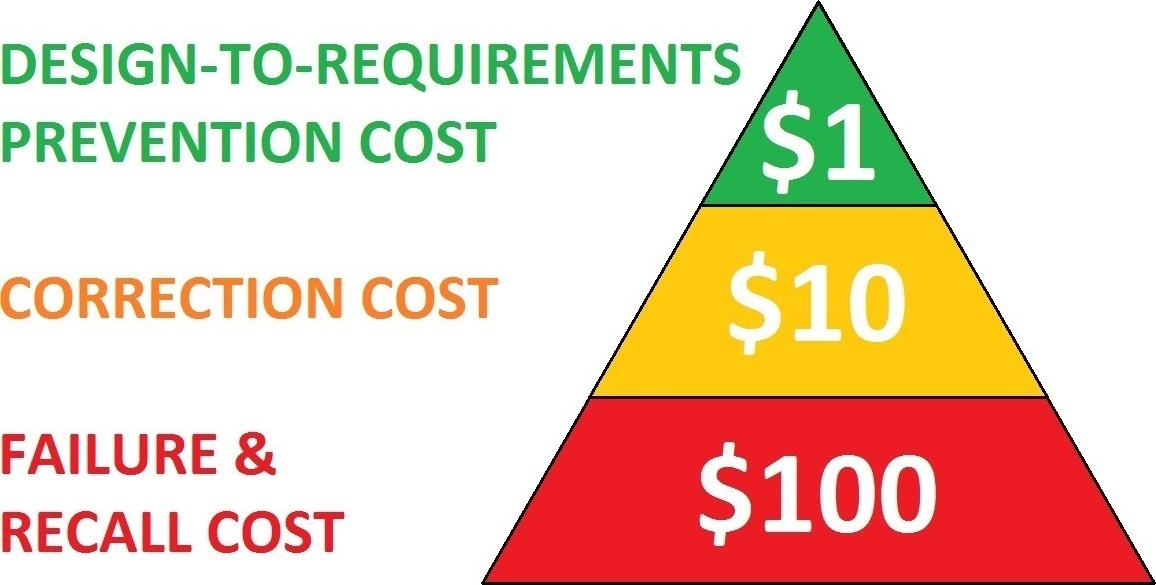
It is always better optics, easier, quicker, and less expensive to do something right the first time. The results would be less headaches. Increased safety, quality, and regulatory compliance. Confident stakeholders, satisfied regulators, and happier customers. Fairness, transparency, and accountability. In short, movement toward a better world.

A.W136.1 The 1-10-100 Rule

Image Arete Consulting

Due care when designing and developing a motor vehicle is not different. A new manufacturer would save years of effort and millions of dollars if it stops wasting time trying to look for “shortcuts” and instead commits to following the statutes and regulations fully - this will actually be the fastest path and the most profitable.

Contact

Hello@AreteConsulting.org   in

A.W130.1 Flickr - Phil Varney - Great Smoky Mtns Natl Park - Newfound Gap Road

             Photo Phil Varney

Copyright © 2021-2026 Arete Consulting. All rights reserved.

Always hand-crafted, never AI-generated.

Site Map | Attributions | Privacy Notice | Disclaimers

Using the Website means you consent to the Terms of Use.

Webpage document code: A.W9002.3