A.W100.1 Arete logo name RGB(29,155,240) R TM SM Arete Consulting
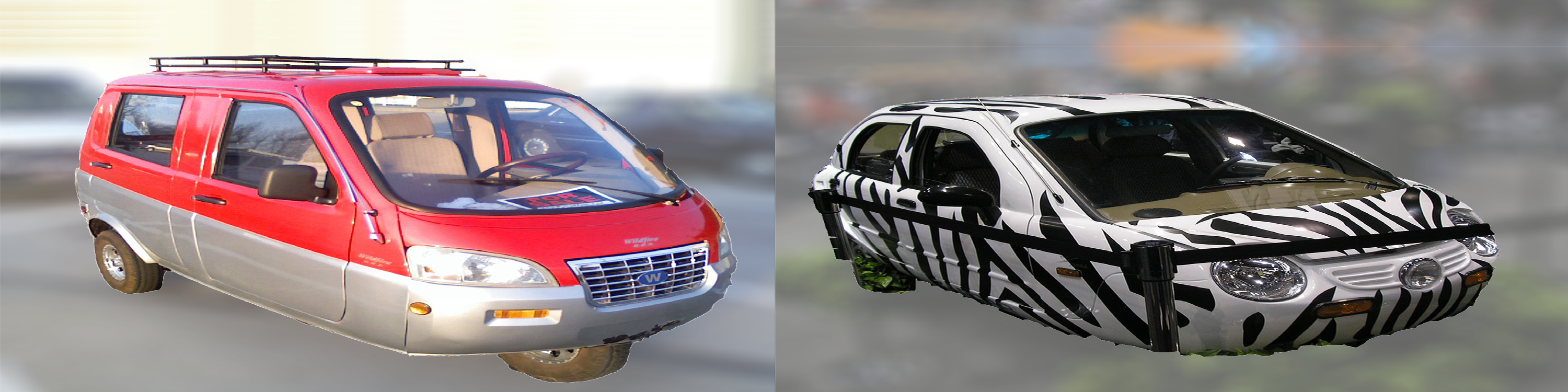
A.W140.1 Wikimedia Commons - Scoty6776 - Wildfire mini car - DiscoverWithDima - ZAP Concept Car

NHTSA Regulatory Enforcement v. Three-Wheel Motorcycle Manufacturers Wildfire and ZAP

             Photo Scoty6776

Photo DiscoverWithDima             

Overview

The U.S. Department of Transportation (USDOT)’s National Highway Traffic Safety Administration (NHTSA) requires that each manufacturer of motor vehicles, equipment, and/or accessories provide full transparency regarding product safety and compliance to all applicable Federal Motor Vehicle Safety Standards (FMVSS) in effect on the date of manufacture.

Based on publicly available information, these are summaries of two case studies of the range of regulatory enforcement actions taken by NHTSA against three-wheel motor vehicle manufacturers for violations of the FMVSS, including mandatory recalls, consequent government orders, lawsuits, countersuits, consent judgments, penalties, charges, and fines.

Wildfire Motors sold three-wheel motorcycles that did not comply with FMVSS. NHTSA required recalls and remedies, and Wildfire initially agreed to recall and repair the motor vehicles to bring them into compliance. As time passed, however, Wildfire did not and could not repair them, so NHTSA ordered them to repurchase the motorcycles. Wildfire resisted, lawsuits and countersuits were filed, NHTSA increased penalties to $6.5M, and eventually NHTSA added the corporate officers to the U.S. federal case to pay for the national recall out of the corporate officers’ personal funds. The case settled with an agreement to fund a $433k repurchase escrow account and pay $100k in court fines. Wildfire was financially ruined and went out of business as a motor vehicle company in the U.S.

ZAP Motors also sold three-wheel motorcycles that did not comply with FMVSS. NHTSA required recalls and remedies, and ZAP initially agreed to recall, but then failed to provide a remedy to bring the vehicles into compliance. NHTSA ordered ZAP to repurchase the units, ZAP defied the order, NHTSA sued the company and sought hefty civil penalties, and eventually ZAP settled the case. ZAP was financially ruined and went out of business as a motor vehicle company in the U.S.

For summaries of NHTSA regulations and requirements regarding recalls, TREAD EWR, and related communication, see Recalls, TREAD EWR, and Related Communication - 49 CFR 573 577 578 579.

Wildfire Motors, Inc.

(aka Snyder Computer Systems, Inc., Snyder Systems, Inc., et al)

In early 2000s, Wildfire began importing three-wheel motor vehicles from China, and sold these into the U.S. market (NHTSA recall lookup: enter “Wildfire”). However, these Chinese vehicles had not been specifically designed to U.S. federal regulatory motor vehicle requirements, and thus should not have been certified compliant to U.S. regulations.

While initially there were no specific customer complaints, eventually NHTSA purchased one of Wildfire’s early vehicles sold in the U.S. to the consumer public. NHTSA took that sample vehicle and immediately tested and inspected it for regulatory noncompliance and defects. Upon inspection, it was discovered that the vehicles had an AS-2 windshield (tempered glazing with ≥70% light transmittance), which did not meet basic U.S. windshield requirements of 49 CFR 571.205 Glazing Materials (FMVSS 205, see Arete summary).

In November 2009, NHTSA informed Wildfire of windshield noncompliance, and NHTSA mandated the first recall for Wildfire vehicles in December 2009 (for example, see NHTSA Recall 09V470 of Wildfire Motors 2009 WF-120). NHTSA records show that customers began complaining.

Documentation from Wildfire shows that, at the time of the recall, the original manufacturer was no longer in business and therefore Wildfire could not rely on the manufacturer for any assistance. Wildfire was solely responsible monetarily and logistically for remedying all noncompliances.

This recall forced Wildfire to purchase new custom-made AS-1 windshields (laminated glazing with ≥70% light transmittance) to fit the vehicles and install these free of charge in the vehicles. Wildfire informed its dealers that new replacement windshields would be available starting January 29, 2010.

However, NHTSA did not stop testing Wildfire’s vehicles. NHTSA contracted Transportation Research Center (TRC), North America’s largest independent vehicle test laboratory and multi-user automotive proving ground, to perform further testing. TRC demonstrated that Wildfire’s vehicles also did not meet basic brake system requirements of 49 CFR 571.122 Motorcycle Brake Systems (FMVSS 122, see Arete summary). These additional failures included the lack of separate brake fluid reservoirs for each brake system, lack of seal and retention systems for the brake fluid reservoir cover, lack of appropriate brake fluid reservoir labeling, and lack of a brake failure indicator lamp, all of which were regulatory noncompliances.

Although Wildfire contested these findings, Wildfire was unable to provide any due care justification, was unable to show any documentation or independent third-party test-results demonstrating compliance was previously achieved and verified, nor was Wildfire able to fix NHTSA’s test-vehicle to prove it could be rendered compliant. Nevertheless, Wildfire delayed recalls for these issues for almost two years until February 2012, when NHTSA informed Wildfire that NHTSA intended to proceed with an “initial decision” that these vehicles were clearly noncompliant unless Wildfire “voluntarily recall” these vehicles. Upon that threat of action, Wildfire then entered into recall and advised its dealers that repair parts would be available in July 2012 (for example, see NHTSA Recall 12V031 of Wildfire Motors 2009 WF650-C, similar to left image above).

In August 2012, NHTSA tested a supposedly “repaired” vehicle only to find that the customer’s vehicle still did not meet the FMVSS requirements.

In October 2012, NHTSA held a public hearing on Wildfire’s failures, but Wildfire failed to attend to the meeting. Instead, Wildfire submitted comments that the supposed remedies Wildfire offered would not permanently fix the recall problems, and Wildfire said it did not have enough money to develop, purchase, or install remedies that would actually fix the recall failures.

In November 2012, NHTSA issued a “Recall Remedy Order”, mandating Wildfire to repurchase all affected vehicles from owners at the average market value of the vehicle ($3,400) and then fully destroy the recalled vehicles. In December 2012, Wildfire sued NHTSA to have the Recall Remedy Order reversed. In April 2013, after continued inaction on Wildfire’s part, NHTSA countersued and increased the civil penalties. The U.S. federal government’s verdict in March 2014 confirmed NHTSA’s lawful Recall Remedy Order to force Wildfire to repurchase all its noncompliant vehicles.

Separately, the U.S. Federal Environmental Protection Agency (EPA) began investigating the engines in Wildfire vehicles. The EPA discovered Wildfire’s engines and systems were also out of compliance for U.S. and EPA regulations, revoked all issued certificates of conformity to Wildfire, and confiscated all imported and unsold engines for forfeiture. In May 2014, Wildfire was forced to enter a consent judgment with the U.S. federal government (“consent decree”).

When Wildfire failed to timely implement the order, NHTSA requested the courts to hold Wildfire and its corporate officers in contempt and to fine Wildfire the civil penalty statutory maximum of $6,486,000.00. With Wildfire completely out of money as a corporation, its vehicles and engines confiscated, and all its resources and personnel completely tied up in litigation with multiple government agencies, Wildfire was forced to enter another consent judgment with the U.S. federal government that required the corporate officers to personally pay $433,000 to repurchase the defective vehicles and pay the courts $100,000 in fines.

Wildfire no longer exists as a motor vehicle company in the U.S. As a consequence of Wildfire’s noncompliance and demonstrable lack of due care, it was completely put out of business by the U.S. federal government.

Additional References for Summary of Wildfire Motors

U.S. EPA notice of voiding all certificates of conformity issued to Wildfire Motors.

NHTSA Vehicle Manufacturers resources.

NHTSA - Understanding NHTSA’s Regulatory Tools: Instructions, Practical Guidance, and Assistance for Entities Seeking to Employ NHTSA’s Regulatory Tools 2022.

NHTSA Enforcement Guidance - Bulletin 2016-01 Docket No. NHTSA-2016-0039 FR Doc# 2016-06759 2016_03_25. (pp. 16270-16275; PDF)

All NHTSA Recall 09V470 documents regarding Wildfire Motors 2009 WF-120, including but not limited to:

All NHTSA Recall 12V031 documents regarding Wildfire Motors 2009 WF650-C, including but not limited to:

ZAP Motors, Inc.

(aka Qingqi Group Motorcycle Co., Ltd., and Zhejiang Jonway Automobile Co., Ltd.)

In 2008, ZAP began importing the Qingqi Xebra electric three-wheel motor vehicles from China, and sold these into the U.S. market (NHTSA recall lookup: enter “ZAP”). Like Wildfire, these Chinese vehicles had not been specifically designed to U.S. federal regulatory motor vehicle requirements, and thus should not have been certified compliant to U.S. regulations.

While initially there were no specific customer complaints, eventually NHTSA purchased a ZAP Xebra in 2008 sold in the U.S. to the consumer public. NHTSA took that sample vehicle and immediately contracted Transportation Research Center (TRC), North America’s largest independent vehicle test laboratory and multi-user automotive proving ground, to test and inspect it for regulatory noncompliance and defects. TRC demonstrated that the vehicle did not meet the pre-burnish or post-burnish brake requirements of 49 CFR 571.122 Motorcycle Brake Systems (FMVSS 122, see Arete summary). TRC discovered additional failures, including: the vehicle lacked separate brake fluid reservoirs, lacked appropriate brake fluid reservoir labeling, and lacked a brake failure indicator lamp, all of which were regulatory noncompliances.

In April 2009, NHTSA informed ZAP of brake system noncompliance and safety defects. In May 2009, ZAP reported a “voluntary recall” (for example, see NHTSA Recalls 09V177 and 09V385 of ZAP Motors 2009 Xebra, similar to right image above). In September and December 2009, ZAP reported additional recalls. Nevertheless, ZAP’s delay, lack of substantive action, and lack of follow-up on these failures continued for two years until December 2011, when NHTSA mandated ZAP to start a new recall campaign for 100% of all ZAP vehicles ever sold (for example, see NHTSA Recalls 12V230 and 12V363 of ZAP Motors 2009 Xebra). NHTSA records show that customers began complaining.

ZAP continued to inadequately respond to NHTSA’s escalating enforcement. ZAP’s Part 577 Owner Notification Letters (ONL) did not meet NHTSA’s regulatory requirements. ZAP was unable to provide any due care justification, and was unable to show any documentation or independent third-party test-results demonstrating compliance was previously achieved and verified. In addition, ZAP was unable to correctly remedy the failures or fix NHTSA’s test-vehicle to prove it could be rendered compliant: the “repaired” vehicle continued to fail the brake tests after each of its three repair attempts.

ZAP then agreed to NHTSA that, if ZAP could not adequately remedy all the failures by September 30, 2012, then ZAP would initiate a repurchase campaign of all customers’ vehicles. Predictably, ZAP failed to adequately remedy all the failures by September 30, 2012. Worse, ZAP then failed to initiate a repurchase campaign.

In October 2012, NHTSA held a public hearing on ZAP’s failures, when NHTSA decided that ZAP had not met its regulatory obligations under FMVSS.

In December 2012, NHTSA issued a “Recall Remedy Order”, mandating ZAP to repurchase all affected vehicles from owners at the average market value of the vehicle ($3,100) and then fully destroy the recalled vehicles. Though ZAP made an effort at this, totaling over $2 million, it did not complete the requirement within the mandated timeframe.

In May 2013, after ZAP had continuously failed to timely implement the order, NHTSA filed suit in U.S. federal court against ZAP for declaratory and injunctive relief and for substantial civil penalties.

In July 2013, ZAP was forced to enter a consent judgment with the U.S. federal government (“consent decree”), after which ZAP finally began issuing certified checks to owners to repurchase the defective, noncompliant vehicles. While NHTSA sought collection on the civil penalties, it does not appear that it was actually paid, probably due to the destroyed financial condition of the company.

ZAP no longer exists as a motor vehicle company in the U.S. As a consequence of ZAP’s noncompliance and demonstrable lack of due care, it was completely put out of business by the U.S. federal government.

Additional References for Summary of ZAP Motors

NHTSA Vehicle Manufacturers resources.

NHTSA - Understanding NHTSA’s Regulatory Tools: Instructions, Practical Guidance, and Assistance for Entities Seeking to Employ NHTSA’s Regulatory Tools 2022.

NHTSA Enforcement Guidance - Bulletin 2016-01 Docket No. NHTSA-2016-0039 FR Doc# 2016-06759 2016_03_25. (pp. 16270-16275; PDF)

All NHTSA Recall 09V177 documents regarding ZAP Motors 2008 Xebra, including but not limited to:

All NHTSA Recall 09V385 documents regarding ZAP Motors 2008 Xebra, including but not limited to:

All NHTSA Recall 12V230 documents regarding ZAP Motors 2008 Xebra, including but not limited to:

All NHTSA Recall 12V363 documents regarding ZAP Motors 2008 Xebra, including but not limited to:

Contact

Hello@AreteConsulting.org   in

A.W130.1 Flickr - Phil Varney - Great Smoky Mtns Natl Park - Newfound Gap Road

             Photo Phil Varney

Copyright © 2021-2026 Arete Consulting. All rights reserved.

Always hand-crafted, never AI-generated.

Site Map | Attributions | Privacy Notice | Disclaimers

Using the Website means you consent to the Terms of Use.

Webpage document code: A.W9001.4