A.W100.1 Arete logo name RGB(29,155,240) R TM SM Arete Consulting
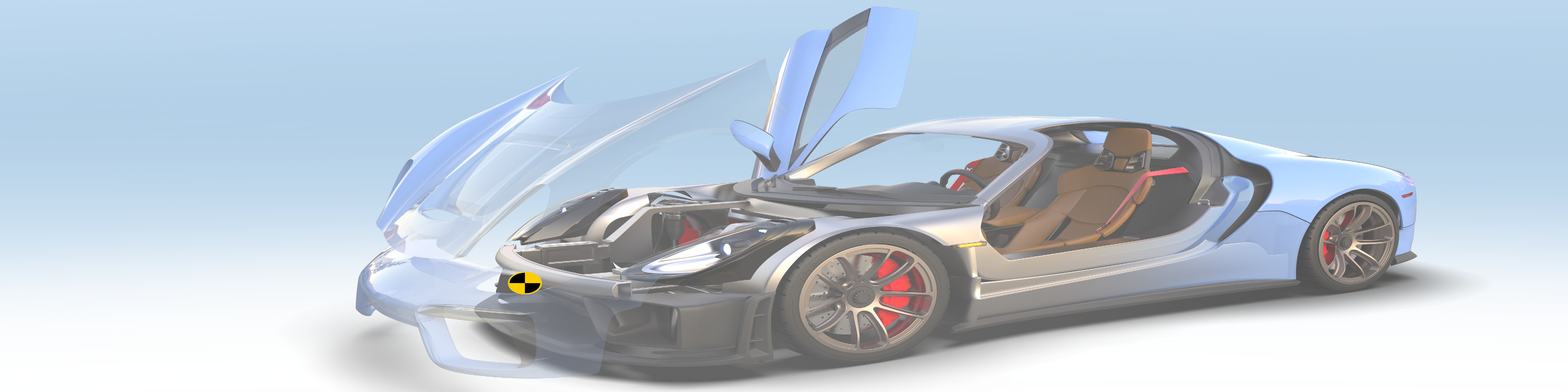
A.W122.1 AreteCutawayTransparentCar CTM US 49 CFR 571.201+ Crashworthiness 70OPACITY

     Crashworthiness

     Summaries of FMVSS 201, 202a, 203, 204, and 205

49 CFR 571.201 Occupant Protection in Interior Impact (FMVSS 201)

Test-Procedure TP-201-02a Part1, TP-201-02b Part2, TP-201P-00 Rigid Pole Side Impact Test, TP-201U-02 Upper Interior Head Impact Protection, and Appendix A, B, C

During a crash within an enclosed cabin, the occupants can impact various objects in the vehicle’s interior, such as pillars, steering wheel, mobile phone holder, dashboard, windshield, etc. FMVSS 201 requires a 165 mm (6.5 inches) diameter, 6.8 kg (15 lbs) headform must not exceed 80 g (785 m/s2) deceleration for more than 3 ms when impacted into an instrument panel or seat back at a speed up to 24 kmph (15 mph), or 19 kmph (11.8 mph) for a Designated Seating Position (DSP, see also DSP Test-Procedure TP-DSP-01) with an airbag.

FMVSS 201 requires each interior compartment door assembly located in an instrument panel, console assembly, seat back, or side panel adjacent to a DSP must remain closed when performing the headform tests, and when an interior compartment door latch system is subjected to an inertial load of 10 g (98 m/s2) in a horizontal transverse direction and an inertial load of 10 g (98 m/s2) in a vertical direction, and when a vehicle impacts a frontal fixed crash barrier at a speed up to 48 kmph (30 mph), and when an interior compartment door latch system is subjected to an inertial load of 30 g (294 m/s2) in a horizontal longitudinal direction.

FMVSS 201 requires a sun visor made of energy-absorbing material must be provided for each front outboard DSP and must not present a rigid edge radius less than 3.2 mm (0.125 inch) that is contactable by a spherical 165 mm (6.5 inches) diameter headform. FMVSS 201 requires each installed armrest must be made of energy-absorbing material that deflects laterally at least 50 mm (2 inches) without permitting contact with any underlying rigid material, or deflects to within 32 mm (1.26 inches) of a rigid test panel surface without permitting contact with any underlying rigid material, or along at least 50 mm (2 inches) of its length provide at least 50 mm (2 inches) of coverage to the pelvic impact area.

FMVSS 201 requires the headform’s Head Injury Criteria (HIC) must not exceed 1000 when impacted into numerous target upper interior components at a speed up to 24 kmph (15 mph).

49 CFR 571.202a Head Restraints (FMVSS 202a)

Test-Procedure TP-202-08, TP-202aD-00, TP-202aS-01

FMVSS 202a requires a head restraint must be provided for each front and rear outboard Designated Seating Position (DSP, see also DSP Test-Procedure TP-DSP-01) and must have a minimum height and a minimum width, and must not exceed a maximum backset, and must not exceed a maximum gap, and must not be removable without a deliberate action distinct from upward adjustment.

FMVSS 202a requires a 165 mm (6.5 inches) diameter, 6.8 kg (15 lbs) headform must not exceed 80 g (785 m/s2) deceleration for more than 3 ms when impacted into the anterior surface of a head restraint at a speed up to 24 kmph (15 mph). FMVSS 202a requires a 152 mm (6 inches) long x 165 mm (6.5 inches) diameter cylindrical test device must not move down into a head restraint more than 25 mm (1 inch) during an initial load of 50 N (11 lbf), and must return to within 13 mm (0.5 inch) of its initial position after a load of 500 N (112 lbf) and also after subsequent reduction of the load to 50 N (11 lbf).

FMVSS 202a requires the headform must not be displaced more than 25 mm (1 inch) during an initial moment of 37 N-m (27 ft-lb), and must not be displaced more than 102 mm (4 inches) perpendicularly and posterior of the torso during a moment of 373 N-m (275 ft-lb) about the H-point, and must return to within 13 mm (0.5 inch) of its initial position after a moment of 373 N-m (275 ft-lb) and also after subsequent reduction of the moment to 37 N-m (27 ft-lb).

FMVSS 202a requires a head restraint must survive and maintain a static load of 890 N (200 lbf) for at least 5 seconds. FMVSS 202a requires the headform’s Head Injury Criteria (HIC) must not exceed 500 during any 15 ms time period when accelerated in a sled test.

FMVSS 202a requires a motor vehicle manufacturer must select an option by the time it certifies the vehicle and may not thereafter select a different option for that vehicle, and must upon request from NHTSA provide information regarding which of the compliance options it has selected for a particular vehicle make and model. FMVSS 202a requires numerous specified information in the vehicle owner’s manual.

49 CFR 571.203 Impact Protection for the Driver from the Steering Control System (FMVSS 203)

Test-Procedure TP-203-02

FMVSS 203 requires that the impact of the steering wheel to a driver body block must not exceed a load of 11,120 N (2,500 lbf) for any period of 3 ms or longer, during a frontal impact at a speed up to 24 kmph (15 mph).

49 CFR 571.204 Steering Control Rearward Displacement (FMVSS 204)

Test-Procedure TP-204-08

FMVSS 204 requires the upper end of the steering column and shaft in the vehicle must not be displaced more than 127 mm (5 inches) in a horizontal rearward direction parallel to the longitudinal axis of the vehicle, when during a vehicle impact with a barrier at approximately 48 kmph (30 mph).

49 CFR 571.205 Glazing Materials (FMVSS 205)

Test-Procedure is visual inspection of regulatory markings per standard ANSI/SAE Z26.1-1996 American National Standard for Safety Glazing Materials for Glazing Motor Vehicles and Motor Vehicle Equipment Operating on Land Highways - Safety Standard

FMVSS 205 is relatively brief, as it references and relies upon ANSI/SAE Z26.1-1996 for most requirements.

  • NHTSA regulation 49 CFR § 571.5 Matter Incorporated By Reference (FMVSS 5) incorporates by reference over one hundred copyrighted standards, including ANSI/SAE Z26.1-1996. Specifically, 49 CFR § 571.5(c)(4) incorporates by reference ANSI/SAE Z26.1-1996 “approved August 11, 1997, into § 571.205” (PDF). Therefore, ANSI/SAE Z26.1-1996 is incorporated by reference into U.S. federal law and consequently into all U.S. state laws.

ANSI/SAE Z26.1-1996 describes two main categories of glazing: in a location and at a height requisite for driving visibility, and not requisite for driving visibility.

FMVSS 205 requires a visual inspection of the glass in the various locations of the vehicle for tinting, shading, and approved material regulatory markings required for that location in the vehicle per standard ANSI/SAE Z26.1-1996.

ANSI/SAE Z26.1-1996 used here in whole or in part for purposes of criticism, comment, teaching, scholarship, and/or research, which qualify as Fair Use and which are recognized as not copyright infringement under U.S. law. For more information, see Terms of Use > Fair Use Notice.


NHTSA Test Procedures

Contact

Hello@AreteConsulting.org   in

A.W130.1 Flickr - Phil Varney - Great Smoky Mtns Natl Park - Newfound Gap Road

             Photo Phil Varney

Copyright © 2021-2026 Arete Consulting. All rights reserved.

Always hand-crafted, never AI-generated.

Site Map | Attributions | Privacy Notice | Disclaimers

Using the Website means you consent to the Terms of Use.

Webpage document code: A.W229.2